
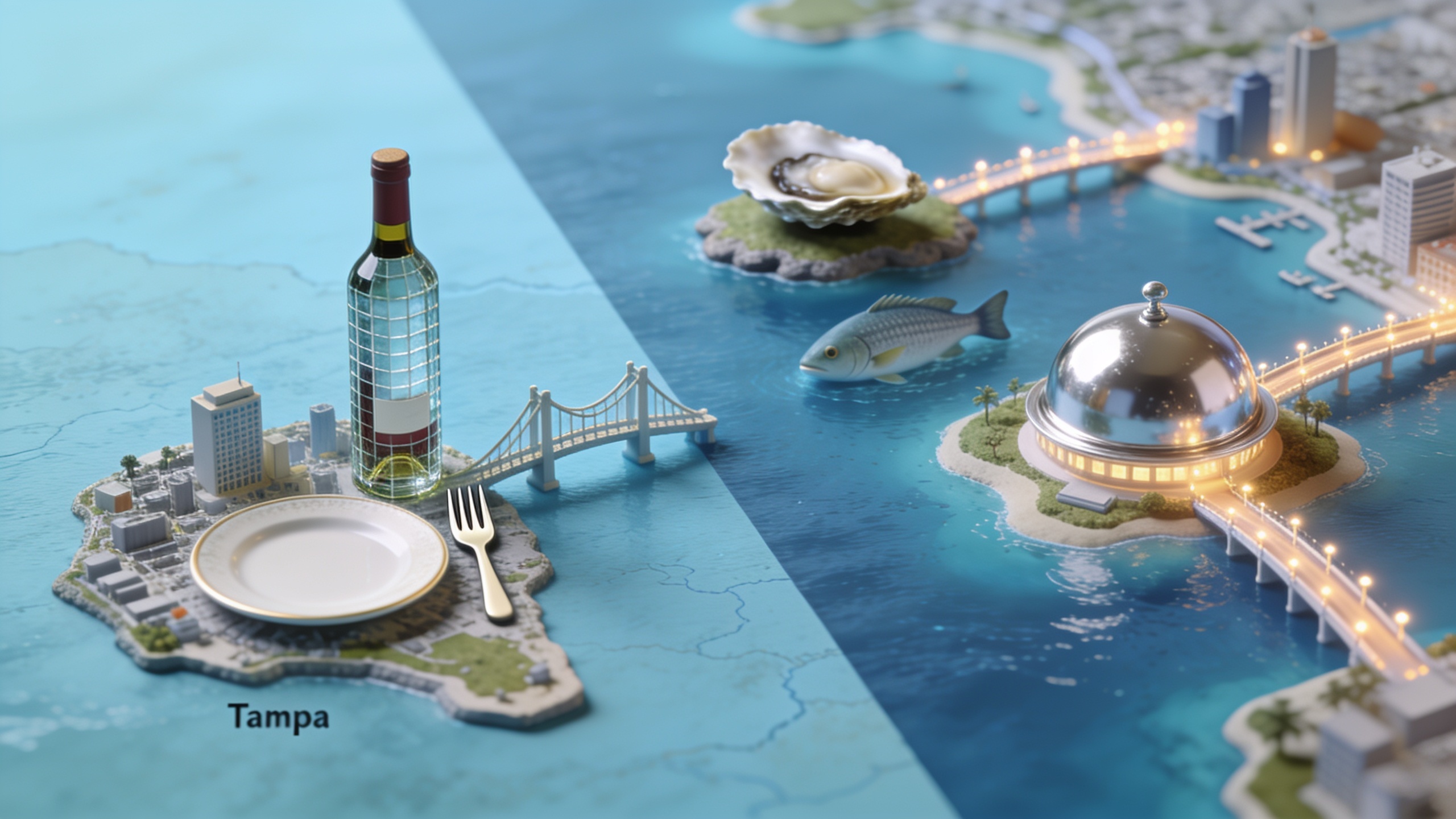
The Real Difference Between Tampa and Tampa Bay Restaurants
 0
0
 0
0
If you have spent any time eating your way around this part of Florida, you have probably heard both terms tossed around loosely. Someone tells you the “Tampa restaurant scene is exploding,” and five minutes later a food writer raves about “Tampa Bay dining.” Are they talking about the same thing? Mostly, yes, but the distinction matters more than people admit, and knowing it will make you a smarter diner.
What the Terms Actually Mean
Tampa is a city. Tampa Bay is a region. That geographic gap shapes everything from the style of a restaurant’s menu to its price point, its clientele, and what local ingredients land on the plate.
The Tampa Bay area covers roughly 4,000 square miles and includes St. Petersburg, Clearwater, Sarasota, Brandon, Bradenton, and a handful of other communities. When a publication or a food blogger says “Tampa Bay restaurants,” they are casting a wide net over all of that. When they say “Tampa restaurants,” they mean the city proper, which runs from Ybor City east through Hyde Park, Channelside, and out toward Carrollwood.
This matters practically. A restaurant guide titled “Best Tampa Bay Seafood” might recommend a spot in St. Pete Beach that is 45 minutes from downtown Tampa. If you plan your evening around that guide without reading carefully, you are in for a long drive.
The Character of Dining in Tampa City Proper
Tampa the city trends toward urban dining. Restaurants here compete on concept, chef pedigree, and neighborhood energy. The going rate for a dinner entree at a well-regarded spot in Hyde Park or Water Street runs $28 to $55. The density is high, which means you can walk from a craft cocktail bar to a Colombian steakhouse to a ramen counter in under ten minutes.
Neighborhoods define the experience. Ybor City carries its Cuban and Spanish heritage into restaurants like the Columbia, a 120-year-old institution that still packs the house with flamenco shows and Cuban bread baked on the premises. SoHo (South Howard Avenue) stacks wine bars and farm-to-table spots next to old-school Tampa Italian. The Armature Works food hall near the Riverwalk pulls in everyone from office workers to tourists, with vendors offering everything from wood-fired pizza to fresh poke.
Tampa restaurants also lean hard into the city’s Latin identity. The influence of Cuban, Puerto Rican, and Colombian communities shows up on menus consistently, and that depth of flavor is a genuine point of difference from most of the surrounding suburbs.
The Character of Dining Across the Broader Tampa Bay Region
Step outside the city and the dining personality shifts. St. Petersburg has built one of the most talked-about independent restaurant scenes in Florida over the past decade. The Central Avenue corridor has a walkable stretch of chef-driven restaurants, craft breweries, and international spots that rivals anything in Tampa proper for quality, often at slightly lower prices.
Clearwater and the beach communities lean toward casual waterfront dining. Fresh grouper sandwiches, stone crab claws in season, and open-air tiki bars dominate. This is exactly where you want to eat if proximity to the Gulf and a relaxed pace matter to you. The trade-off is that formal, white-tablecloth dining is sparse in those areas.
Bradenton and Sarasota, on the southern edge of the Tampa Bay region, skew toward a wealthier, older demographic. Sarasota especially has a cluster of sophisticated restaurants with serious wine programs and menus that court the arts crowd around the Ringling Museum.
Side-by-Side Comparison
| Factor | Tampa (City) | Tampa Bay (Region) |
|---|---|---|
| Price range (avg. entree) | $28 to $55 | $14 to $55 |
| Dominant cuisine styles | Latin, Southern, Modern American | Seafood, Latin, Italian, Farm-to-table |
| Dining density | High, walkable districts | Spread out, often car-dependent |
| Waterfront dining | Limited but growing | Abundant, especially on Gulf side |
| Late-night options | Strong, especially Ybor City | Limited outside Tampa city |
| Chef-driven independent spots | High concentration | Concentrated in St. Pete |
Where Each Type of Dining Wins
Tampa city wins in these categories. Late-night dining. Adventurous, concept-forward restaurants. Cuban and Latin food with authentic roots. High-energy nightlife attached to the meal.
The broader Tampa Bay region wins here:
- Fresh Gulf seafood in settings right on the water
- Casual fish shacks with decades of local reputation
- Craft brewery food pairings, especially in St. Pete
- Lower average prices on quality food in suburban spots
- Relaxed, unhurried pacing at coastal restaurants
Neither is objectively better. They serve different moods and different occasions.
A Few Restaurants That Illustrate the Gap
Bern’s Steak House in Tampa city is a good anchor point. It is a 70-year-old institution with an 8,000-label wine cellar and a dessert room upstairs where you eat inside a wine barrel. That is quintessentially Tampa city dining, steeped in history and personality.
Flip the map to the beach side and you find places like The Lobster Pot in Redington Shores, a cash-only seafood house where the lobster bisque has been made the same way for over 40 years. The experience has nothing to do with urban sophistication. It is about fresh product, a loyal local crowd, and a room that has seen better decorating days but still fills every night.
Both restaurants are “Tampa Bay restaurants” if you use the regional label. They have almost nothing else in common.

Key Takeaways and Where to Go From Here
When someone recommends a “Tampa Bay restaurant,” ask which city it is in before you commit to the trip. The region is large enough that the drive alone changes your evening plan.
For urban dining energy, Latin-influenced menus, and late-night options, stay inside Tampa proper. For waterfront Gulf seafood, casual local spots, and the independent restaurant energy of St. Pete, venture out into the region.
The best approach is to treat Tampa and the surrounding Tampa Bay area as complementary dining destinations rather than interchangeable ones. Map out your week with both in mind, assign the right restaurant to the right mood, and you will eat extremely well across this whole corner of Florida.